This seasonal quiz is a light creative activity for anime fans who enjoy imagining how they would contribute to a fictional team. It was prepared during October, when Halloween-themed anime quizzes and reader polls are being published. Those examples are editorial signals, not proof of search volume or a measured trend for every country. This quiz uses four original group roles rather than characters from a named series, so readers can play without needing prior episode knowledge or encountering plot spoilers.
The result is a prompt for reflection, not a diagnosis, aptitude test or formal personality assessment. It describes a possible way someone might act in a playful team scenario: planning carefully, checking a route, welcoming others or noticing clues. People behave differently across settings, and a short multiple-choice activity cannot capture a whole person. Treat the wording as a story lens that may feel familiar, partly familiar or not like you at all.
Each question presents an everyday fictional choice inside a harmless Halloween adventure: entering a library, responding to a sound, preparing a puzzle path or welcoming someone who feels left out. There is no need to have watched a particular anime. The situations are intentionally broad and do not depend on character facts, series lore, combat knowledge or a correct answer. A reader can choose the response that feels most natural rather than the one that seems most impressive.
The quiz has four result roles. The Quiet Strategist likes to understand a situation and make a flexible plan. The Brave Scout tends to take a practical first step while checking that the group can move safely. The Mood Maker pays attention to inclusion and the emotional tone of a group. The Curious Clue Keeper enjoys careful observation and questions. These are fictional labels for this activity, not fixed categories or claims about how people must behave.
The answer mapping is balanced: each question offers one option for each role. The system associates each selected option with its role and compares how many selections point to each result. It does not add the index numbers together, rank a person by a score, or treat any response as correct or incorrect. A result with the largest number of selected matches represents the most frequent pattern in that particular set of answers. The public result page should be considered authoritative for the actual display behavior.
If two roles feel equally familiar, that is a reasonable outcome. People can combine qualities, and a short quiz may not create a unique winner every time. The result system may have its own behavior when answer counts tie; this description does not invent a tie-breaking rule. Readers can compare the two descriptions, retake the activity with a different honest choice, or simply keep both roles in mind. A tie is not evidence of a problem with a person.
For a group activity, invite friends to answer independently before discussing their results. Ask which scene shaped a choice, what alternatives they considered and whether their role description fits only in some situations. Let participants pass on sharing. Do not use a result to label a classmate, assign responsibilities, judge leadership, select a team captain or infer someone's mental health. The quiz is for entertainment and conversation, and each reader remains the best judge of whether a description feels useful.
The Halloween setting is decorative and can be adapted. A teacher or host can replace the library, candlelight or puzzle trail with a general mystery, a school festival or a teamwork challenge. Keep scenarios safe, accessible and welcoming. Avoid asking participants to reveal fears, private experiences or personal information. If the quiz is used with children, explain that answers do not evaluate them and provide a way to skip any prompt that feels uncomfortable.
The activity can be played on a phone or computer by selecting one response per question. There is no speed requirement, and pausing to read every option is encouraged. A participant can choose the option closest to their usual first response, not a promise about what they would always do. In real life, a thoughtful person may plan in one situation, lead in another, and listen quietly in a third. Context matters more than the quiz label.
A useful follow-up is to notice what the questions ask readers to value. Some options emphasize safety and preparation; others emphasize encouragement, curiosity or group participation. None is presented as superior. A strong team often benefits from different habits, and one person may move between them. If a discussion follows the quiz, ask how the roles could cooperate: a planner can listen to a scout's observation, a clue keeper can share evidence, and a mood maker can ensure everyone is included.
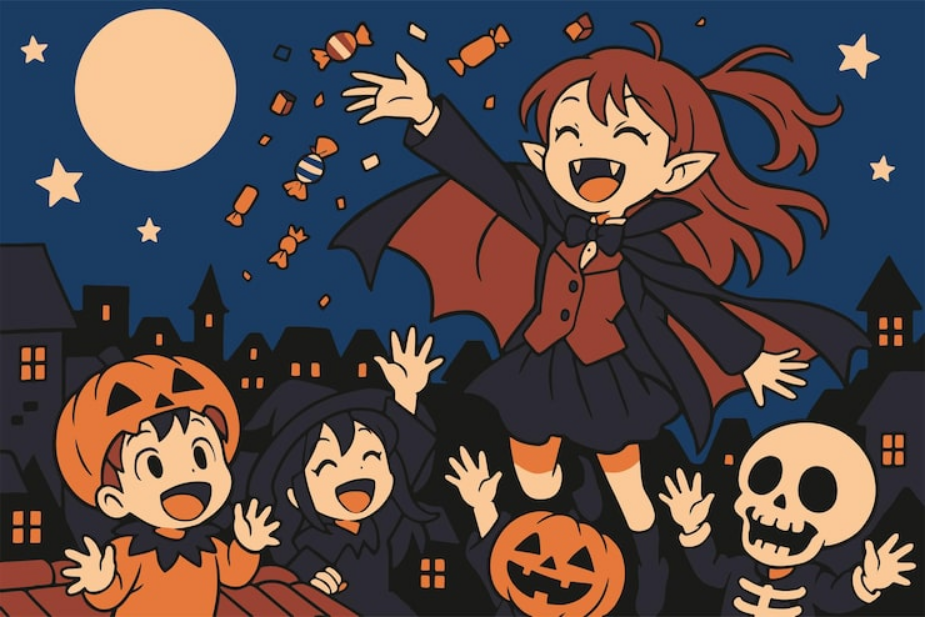
The quiz does not contain anime characters, official artwork, franchise names or plot details. Its title connects a seasonal group scenario with anime fandom, while the roles and situations are original. The cover image is a general Halloween group photograph used under the Pexels license, not an image of an anime work or endorsement by the people depicted. Result images are illustrative photographs that match the mood of each role; they do not depict a real quiz participant or establish an identity.
When sharing a result, describe it as a playful match from this quiz rather than a verified fact. A reader might say, 'I got Curious Clue Keeper, and I like checking details,' without concluding that every person with that result has the same traits. Avoid medical, educational or employment decisions based on the outcome. It should not replace professional advice, validated psychological tools or a conversation about a real concern. The result text deliberately uses flexible language such as 'may' and 'in this fictional team.'
This original activity was written for mobile-friendly reading with short prompts, clear choices and brief result summaries. The translated English, Arabic and Turkish versions keep the same four-result order and preserve the mapping between each choice and its role. This consistency makes the language versions equivalent for play, although phrasing naturally changes to read clearly in each language. The Arabic and Turkish editions translate the instructions and outcomes rather than asking readers to understand English.
There is no externally measured claim that this particular quiz is popular, scientifically accurate or predictive. The seasonal context was selected because current anime outlets have published Halloween costume quizzes and reader polls during October; those are examples of editorial coverage, not comprehensive market research. Poll2Know performance metrics are not connected here. Search demand, clicks, completion rates and user responses should only be reported when a trustworthy analytics source provides them.
Use the activity as a small moment of fandom fun: answer honestly, read the result with curiosity and remember that people are more complex than four roles. If the description fits, consider which parts resonate and in what settings. If it does not fit, there is no need to force it. The point is not to discover a hidden diagnosis or a permanent identity; it is to enjoy a seasonal scenario and talk about how different approaches can help a fictional group work together.