This playful color moodboard personality quiz invites you to choose the visual details you would enjoy exploring today. It is made for entertainment and creative conversation. It does not measure personality, diagnose a condition, assess artistic ability, or tell you how you must behave. Your result is a light archetype based only on the preferences you select in these questions.
The quiz focuses on everyday creative choices: a starting palette, a page layout, a source of inspiration, and what you might do when a group has too many ideas. There are no correct or incorrect preferences. Selecting a calm background is not better than choosing a vivid accent, and an organized layout is not more valuable than a collage. The options simply connect to different result descriptions.
Each question offers one choice. Pick the option that sounds most enjoyable in the moment rather than trying to guess what a particular label means. You do not need design experience, a favorite color, or a specific hobby. If two options seem equally appealing, choose the one you would try first today. Another day, you may make different choices and see a different outcome.
The four possible results are the Quiet Curator, Bold Spark, Curious Mixer and Clear Architect. Each name summarizes a creative moodboard style for the purpose of this small entertainment activity. The descriptions are deliberately non-clinical. They do not classify you into a psychological type, predict your relationships, or make claims about intelligence, mental health, job performance, or artistic talent.
The Quiet Curator result describes a preference for calm space, careful references and a restrained accent. Someone who enjoys this direction might leave room around a few selected images, textures or colors. That is one possible creative approach, not a rule. A quiet board can still include a strong point of contrast, and the result does not mean that a person is always quiet or reserved.
The Bold Spark result describes enjoyment of vivid contrast and a first draft that gives a project energy. A person choosing those options might start with one strong color, an unexpected image or a quick visual sample. That does not mean the person is impulsive or loud in other parts of life. It only offers a playful way to describe the visual choices made in this quiz.
The Curious Mixer result describes interest in variety and connections between different references. A moodboard in this style may bring together shapes, materials or pictures that do not normally sit beside each other. Experimenting can be enjoyable, but the result does not promise originality or a specific creative skill. It is an invitation to explore, not a score or a professional portfolio review.
The Clear Architect result describes enjoyment of order, grouping and visual paths that are easy to follow. A person may like to create sections, align samples or label ideas before choosing a direction. Structure can support a project, but this result does not imply that the person dislikes spontaneity. Creative work can move between a clear plan and an unexpected discovery.
The quiz uses a simple category method: every option belongs to one of the four result styles, and the result represented by the largest group of your selected options is intended to appear. The activity does not add the result index as a score. If two styles receive the same number of choices, the backend tie behavior has not been independently confirmed; this description does not invent a tie-break rule.
A moodboard is a way to collect visual references for a project, not a fixed personality label. Designers and students may use colors, pictures, words, objects or textures to communicate a direction. This quiz keeps that idea small and accessible. You can use a result to start a conversation about preferences, then ignore it whenever it does not fit the actual project.
For a group activity, participants can compare the choices they made without ranking one another. Ask which option felt easiest to choose, which one was surprising, and what visual element each person would add to a shared board. The result descriptions are prompts for conversation. They should not be used to select teammates, assign work, screen applicants, or make decisions about a person.
The quiz does not request personal contact information, medical details, work history or private images. Participation is optional. You can stop at any point, keep the result to yourself, or discuss a choice without sharing a screenshot. If you do share the result, check the image and page for any personal information before posting it to a public feed or group.
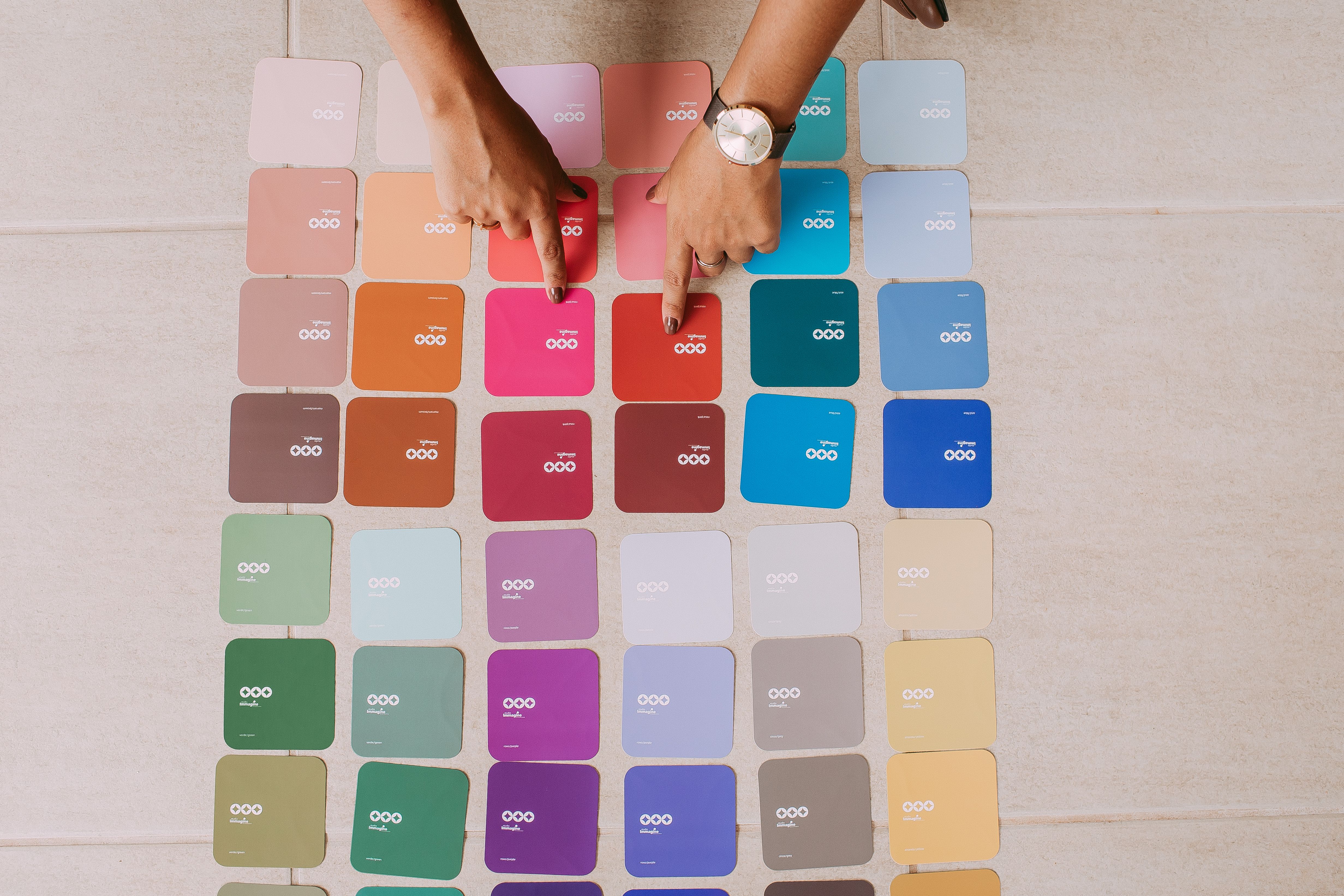
The cover photograph shows hands choosing color palette cards on a work surface. It is a licensed stock photo used as a general illustration of selecting colors; it does not depict a quiz result, a named designer, or a scientific test. The photo itself does not represent any participant. The image license allows its use under the applicable Pexels terms, and no endorsement by the photographer is implied.
The moodboard theme is an editorial choice informed by recent public quiz-writing commentary that discusses aesthetic types and mood-based sorting as shareable quiz formats. That commentary is not a search-volume report and does not prove a current trend in any specific country or language. No search rankings, analytics, click-through rates, or audience preferences were supplied for this publication.
After completing the quiz, read the result as a snapshot of the options you selected today. If you want to turn it into a practical activity, choose a small project, collect three references and try one visual detail from your result. Then ask a friend to suggest a contrasting direction. The purpose is to make starting a creative conversation easier, not to test whether anyone is talented.
This is entertainment content, not a clinical or educational assessment. A result cannot diagnose a personality trait or mental-health condition. The labels are invented for this quiz and should not be confused with established psychological frameworks. People are more complex than four descriptions, and a preference can change with context, mood, culture and the goal of a project.
The English, Arabic and Turkish editions preserve the same four result positions and map each answer to the same category index. The wording is localized so instructions read naturally in each language while the underlying choices remain equivalent. This keeps the activity consistent across versions; it does not make the result a validated instrument or a translation-certified psychological measure.