A jigsaw puzzle can begin in several equally enjoyable ways. One person notices the outline of a loose piece, another follows a change of colour, and someone else keeps returning to the picture on the box. This playful puzzle personality quiz asks what draws your attention in an imagined puzzle session. It is about the choices that appeal to you today, not a test of intelligence, patience, artistic talent or a permanent personality type. You do not need a puzzle beside you, and you do not need to solve anything before choosing an answer.
Imagine a comfortable table with a colourful puzzle spread across it. There is enough space to look around, no competition, and no deadline. The picture includes several areas, such as a building, a garden and a stretch of sky. You are free to choose where to begin and to change direction later. Holding that same scene in mind will make the questions easier to compare. If you usually complete puzzles under very different conditions, answer for this fictional setting rather than trying to describe every puzzle you have ever attempted.
The quiz contains eight single-choice questions. Each asks you to choose the response closest to your preference in a small moment: selecting a starting point, looking at an uncertain piece, or returning after a break. There are no correct and incorrect preferences. Read all the options before selecting one, because the first option is not intended to be the best or most sensible answer. If two choices appeal equally, choose the one you would actually try first in the imagined situation. Your other preference does not disappear just because this question accepts one response.
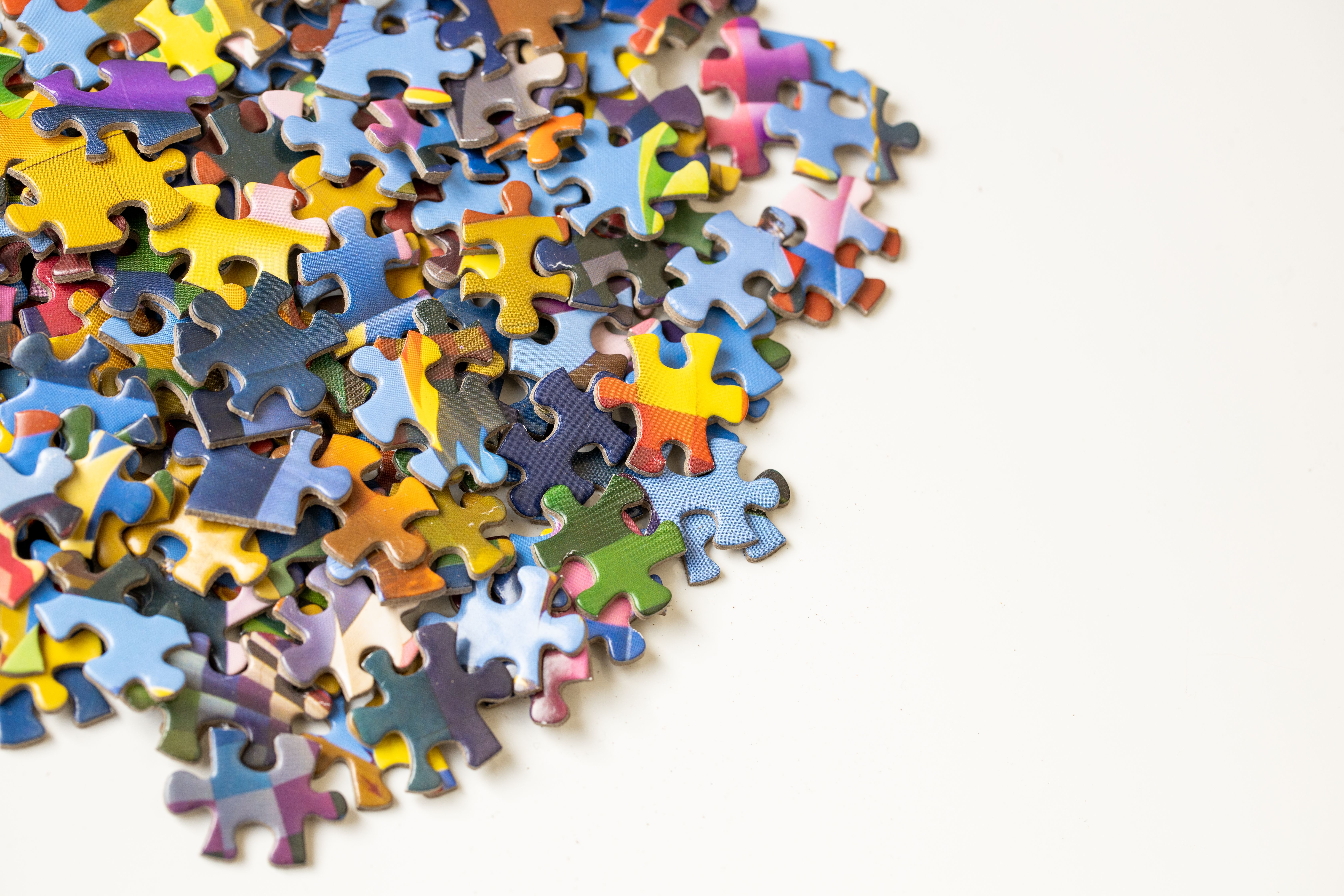
You do not need technical puzzle vocabulary. A piece can be described by its outline, the marks printed on it, or the part of the larger picture it might belong to. Questions use these everyday ideas without requiring a particular brand, a special puzzle size or advanced techniques. The cover photograph shows loose puzzle pieces as an illustration of the activity. You are not being asked to identify an object in that photograph, memorise its colours, or inspect details on a small screen. The questions can be answered from their words alone.
There are three possible result descriptions: the Shape Observer, the Colour Tracker and the Scene Connector. These are invented labels for this entertainment quiz. They describe a direction your selections may lean toward; they are not established psychological categories. The labels are also not ranked. One result is not more mature, creative, logical or successful than another. A person can enjoy all three approaches during one afternoon, and choosing a different puzzle image could change what catches that person's eye. Read the result as a conversation starter rather than a definition of yourself.
Each selected response contributes to one result group. The group represented by the largest number of your selections is the intended winning result. The option numbers are not a scale on which a larger number means a stronger or better personality. You therefore do not need to calculate an average or try to raise a score. If groups receive equal highest counts, there is no unique winner from the counts alone. The platform's tie handling has not been independently verified for this quiz, so do not interpret a single displayed label in that situation as stronger evidence than the tied choices.
Try answering without imagining what a skilled puzzle enthusiast would say. There is no hidden reward for appearing organised or spontaneous. If you genuinely enjoy checking a small visual detail, choose that. If you would rather look at how a section fits into the overall scene, choose that instead. The useful part of the experience is noticing a preference you recognise, even if it seems ordinary. A relaxed answer is more suitable for this activity than a carefully engineered attempt to obtain the result name you like most.
The situations are intentionally limited to a jigsaw puzzle. Enjoying one way of examining a piece does not tell us how you make important decisions, learn every school subject, work with colleagues or cope with difficult events. The quiz cannot identify a learning style, diagnose a condition or assess visual ability. If an option does not match your experience, choose the closest available one or stop. There is no need to force your life into these three descriptions. Accessibility needs and comfort can influence how someone approaches a physical puzzle without becoming a personality statement.
After reading your result, choose one sentence that feels familiar and one that does not. Think of a particular puzzle moment that supports each reaction. This small reflection keeps the description connected to an actual experience instead of accepting every friendly statement automatically. You can also ask whether the image, lighting, available time or company would change your answers. Those details are part of the situation. A result that fits only under certain conditions can still be an enjoyable prompt, provided you keep those conditions in view.
If you take the quiz with a friend, answer separately before comparing results. Discuss which question was hardest to choose rather than deciding who has the better type. You might discover that you reach the same result for different reasons, or different results despite enjoying puzzles together. Neither outcome establishes compatibility or predicts whether you will make a good team. A more useful next step is to agree on a small shared puzzle session and ask each other what would make it comfortable. Let people explain their own preferences rather than explaining them on their behalf.
For a gentle follow-up activity, spend a short session noticing what you naturally examine on a real puzzle. On another occasion, deliberately try an approach you use less often and see whether it changes the experience. You are not expected to become faster, and there is no performance target attached to the result. Stop whenever you want, especially if the activity feels tiring or frustrating. The point is to explore a leisure preference with curiosity. A successful session can simply be one in which you enjoyed looking at the picture and choosing your next piece.
You may repeat the quiz later, but a changed result is not proof that your personality has transformed. You may be remembering different puzzles, responding to a different mood, or choosing between two preferences that were close together from the start. English, Arabic and Turkish versions describe the same situations and preserve the same result groups. Choose the language that makes the instructions easiest to understand. When you are ready, picture the table again and answer for the approach you would enjoy today. Keep the result light, specific to this activity, and open to your own interpretation.