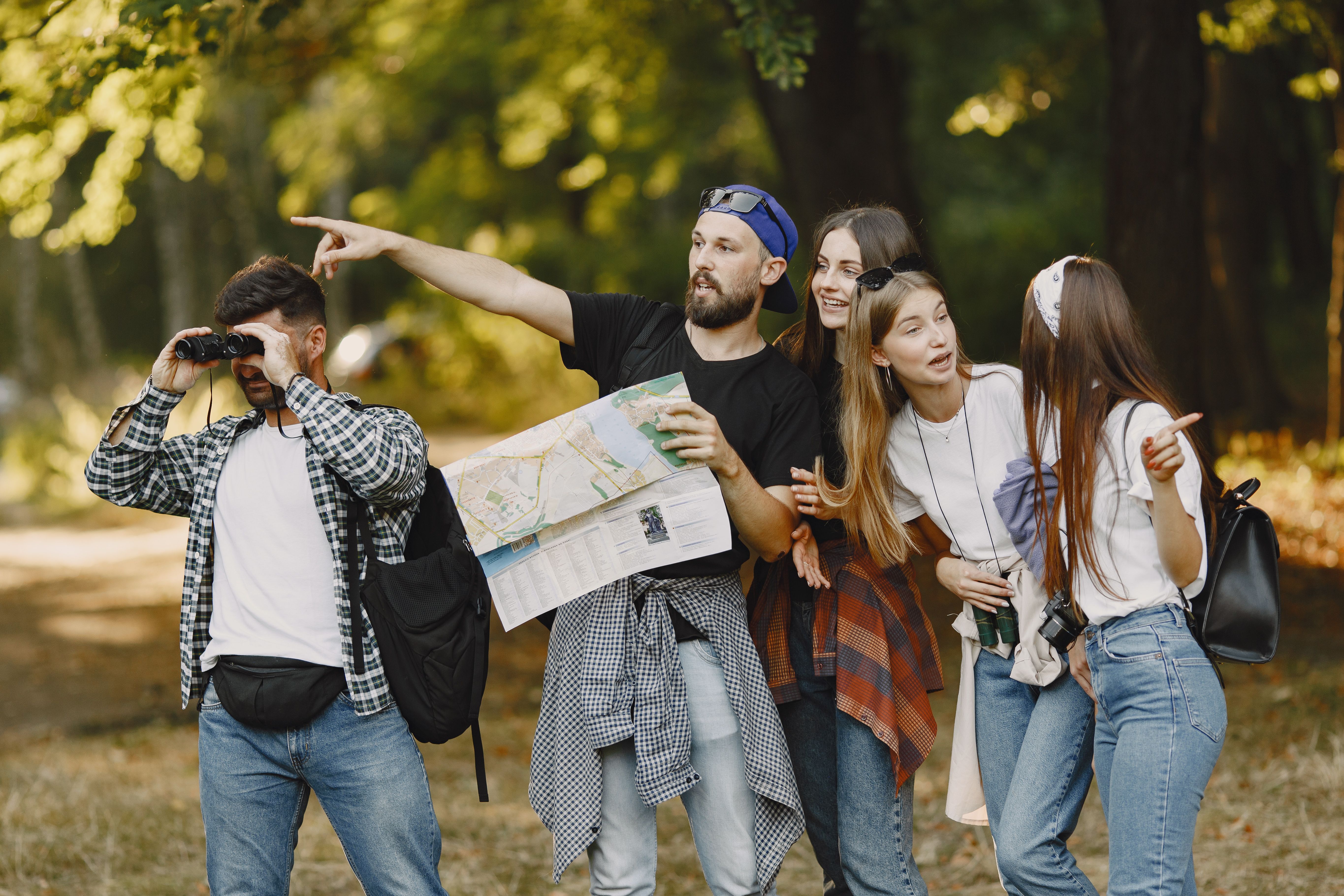
What kind of explorer are you when you arrive somewhere new? This short personality activity looks at everyday preferences during a small outing: how you prepare, what you notice, how you spend unexpected free time and what you enjoy sharing with a companion. You do not need to travel abroad or buy anything to take part. Imagine a safe, accessible place such as a familiar park, a small exhibition or a neighbourhood you would like to know better. Choose the answer closest to your preference today, rather than the answer that sounds most impressive. There are no correct or incorrect preferences here.
The activity contains eight situations with one choice for each situation. Read all four options before selecting one. If two options sound equally appealing, imagine which action you would probably take first in the situation described. You are not being asked to reject the other actions forever. A person can enjoy careful preparation and still welcome an unexpected discovery. The choices simply give the activity a consistent way to produce a playful result. You can take a moment to think, but there is no advantage in trying to identify which option leads to a particular label before answering.
The possible results describe a planner, an observer, a connector and a spontaneous explorer. These are invented descriptions for this activity, not scientific categories or professional assessments. They should not be used to decide whether somebody is suitable for a job, a relationship or a responsibility. Your answer may change with your energy, your company, the location and the time available. Even when one label fits several choices, it does not capture your whole personality. Read the result as an invitation to reflect on a small preference and try a useful idea, rather than as a permanent statement about who you are.
Every selected option belongs to one result. The result represented by the largest number of your selected answers is the leading result. The system does not add the numerical labels of the categories as if a larger label were a better score. Nor does this activity rank one style above another. A planner is not automatically more responsible than a spontaneous explorer, and a connector is not automatically friendlier than an observer. Several styles can be close together. If your choices feel mixed, that is an ordinary outcome of having different preferences in different situations, not a problem you need to correct.
To make your answers comparable, keep the same imagined outing in mind throughout the questions. For example, picture a short daytime visit with enough time to return comfortably. Assume the place is open, the route is suitable for you and basic practical arrangements have already been handled. The question is what you prefer to do within that setting, not whether you would ignore safety or accessibility. If you normally use assistance, transport or a different way of exploring, include that in the situation you imagine. Exploration can mean noticing a detail, listening to a story or looking at a display; it does not require a demanding walk.
When you reach the result, look for one observation that seems familiar and one suggestion that might be worth trying. You do not have to agree with every sentence. If the description does not fit, think about which question was hardest to answer and whether the available options missed something important to you. A short entertainment quiz cannot represent every experience. You can use that mismatch to describe your preference more accurately in your own words. For example, you might like a clear starting point while wanting plenty of freedom after arriving. That combination is more informative than forcing yourself into a single label.
You can also take the activity with a friend, provided each person wants to participate. Answer independently before comparing results, so one person does not steer the other's choices. Instead of asking whose result is better, discuss what would help both of you enjoy a shared outing. One person might prefer knowing the meeting time, while another wants a quiet pause to look around. Both requests can fit into the same plan. Treat a different result as a starting point for a conversation. Do not use it to explain somebody's behaviour without listening to what they actually say they need.
For a group activity, keep the discussion voluntary and brief. Invite participants to share a useful planning preference rather than requiring them to announce their result. Someone might say they like a written meeting point, a little unstructured time or a chance to ask questions. Turn those suggestions into a practical plan only when the group agrees. Avoid assigning all organising work to the person labelled a planner or all social tasks to the person labelled a connector. The labels do not create duties. Sharing responsibility and asking directly are better ways to arrange a group experience than relying on a quiz result.
There is no need to include private information in your answers or in a conversation about the result. The questions use ordinary imagined situations rather than names, addresses or personal histories. If you share a screenshot with somebody else, review what is visible on the screen first. A result can be a light conversation starter without becoming a public description of your identity. You may also prefer to keep the result to yourself and write down only the small idea you want to try. Participation and sharing are separate choices, and neither is necessary to enjoy the other.
If you repeat the activity later, use the same imagined setting when you want to compare your own choices. If you change the setting, notice that you have changed the question you are effectively answering. A quiet visit alone and a busy afternoon with friends may naturally bring out different preferences. A changed result does not prove that your personality has transformed. It may simply reflect what matters in that moment. Rather than trying to collect a preferred label, compare the specific decisions that changed and consider whether those decisions suggest a more comfortable way to organise your next small outing.
After finishing, choose one modest experiment that suits your circumstances. You could leave time for a pause, agree on a meeting point, pay attention to one detail or ask a companion which part of a visit interested them most. Keep the experiment small enough to try without turning the outing into a task list. Later, ask whether it made the experience more enjoyable or easier to organise. Your own observation matters more than the label. This activity is complete when it gives you a useful thought or an enjoyable conversation, even if you never repeat it or compare your result with anybody else.